One may get the impression that Milgromian dynamics is a modification of gravity that applies only on very large scales like galaxies because that’s the sort of system most of the talk about MOND is about. However this is not true. MOND applies in any system regardless of size as long as relativity is not important (so it doesn’t work for neutron stars and black holes). MOND predicts deviations from Newtonian gravity only when the gravitational field gets very very weak.
The data from galaxies still shows this most clearly though. Compare the two graphs below. In both cases the vertical axis shows how much faster the stars in a galaxy are moving compared to the Newtonian expectation. On the horizontal axis in the top image we see the radius at which the measurement was taken. On the horizontal axis in the bottom image we see the expected Newtonian gravitational acceleration from the observed distribution of mass. We can clearly see that at an acceleration of ~10-10 m/s2 gravity starts behaving funny!


MOND applies at all length scales:


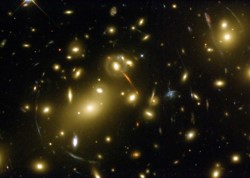
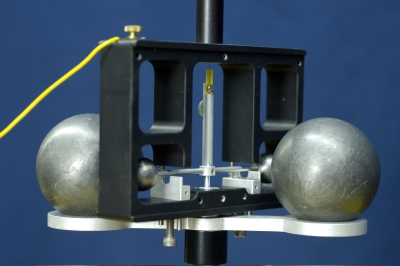
MOND also applies in your living room and the bottom of your tea cup. Though you don’t see anything different from what Newton would predict in your living room because the gravitational accelerations are too large so we are in the Newtonian limit of MOND. For gravitational experiments with very small accelerations we are still in the strong gravitational field of the earth which also forces a Newtonian result because of the “external field effect”. This will be covered in a later post.
MOND should also apply to X-ray emitting system such as galaxy clusters and to the universe as a whole. However for various reasons it gets messy there. Both of those cases will be covered in their own posts in the future.


 Continental Hotspot
Leave a Reply