
Have you ever seen some really old skies mounted to a wall next to some deer antlers, a crucifix and a rusty scythe and thought to yourself “I wonder how old those are?”. And maybe further wondered “When was skiing invented anyway?”. Well this morning I stumbled on the map above about the history of skiing which led me down a google rabbit hole. Not only is skiing much much older than I thought it would be, its prehistoric origins are clouded in mystery.

So it turns out that there are two regions where evidence for prehistoric skiing exists: Scandinavia and the Altai Mountains. The evidence consists of various archeological finds such as ski’s themselves, bindings, skins for ascending as well as rock carvings of skiing figures (a.k.a. “petroglyphs”). These finds can be radiocarbon dated to determine their age. Thus far the oldest confirmed find is a ski found in Vis, Russia estimated to have been made between 6300 and 5000 BCE. It is also this date that FIS tells us is the dawn of skiing. Researchers from China however claim that the petroglyphs found in the Altai mountains showing skiers predate that by about two thousand years. This gives us a tentative timeline of the history of skiing like this:

Scandinavia
Scandinavia currently has the best papers for claiming to be the origin of skiing. Across Norway, Sweden, Finland and Karelia (formerly Finland, now Russia) a multitude of archeological finds confirm that skiing here is at least 8000 years old.

The Norwegian Innlandet County Municipality is sponsoring field work on this topic leading to amazing discoveries now that the ice sheets and glaciers are thawing out. Check out these two articles for more:
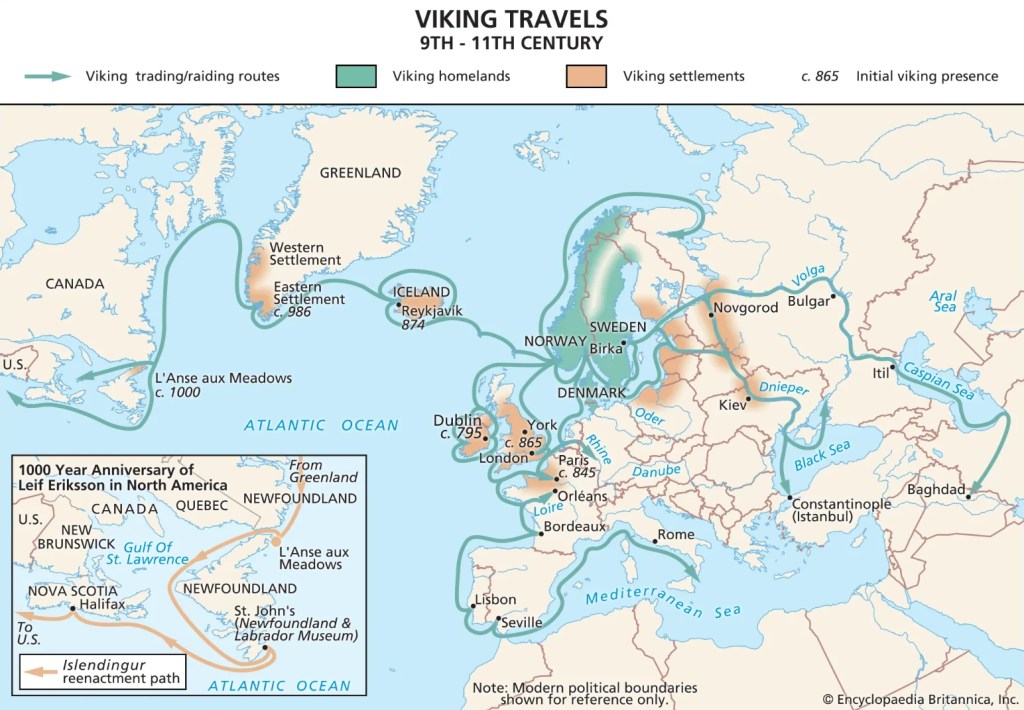
Another extremely old ski was found in the ice of Greenland which was dated to 1010 CE. This medieval ski is however not thought to be an independent invention but merely a handy means of transport used by the Norse settlers during the Viking colonisation of North America. Their settlements were abandoned when the Little Ice age set in and the art of skiing was lost in Greenland and North America until renewed European settlement in thr modern colonial period.
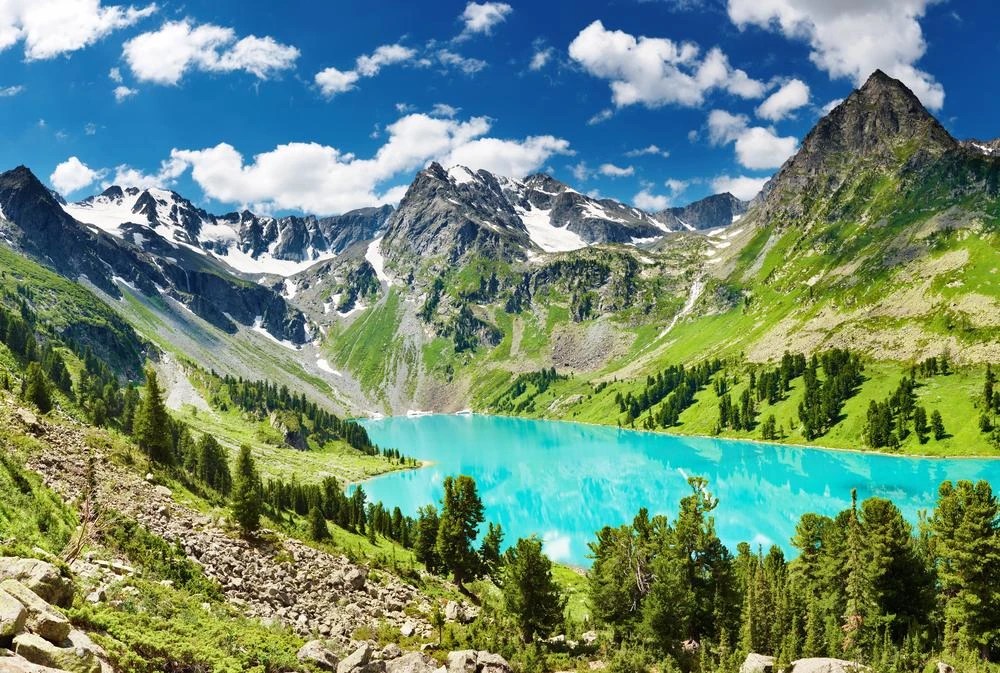
Altai Mountains
Another claim for the birthplace of skiing comes from the far flung Altai mountains. This lone mountain range in the heart of Central Asia is about the size of Portugal or Hungary but with only about 1% of the population. Cave paintings from this region seem to support that skiing here is at least as old or possibly older than in Scandinavia. It is not known in which direction the invention spread or whether skiing was perhaps invented independently in both regions.

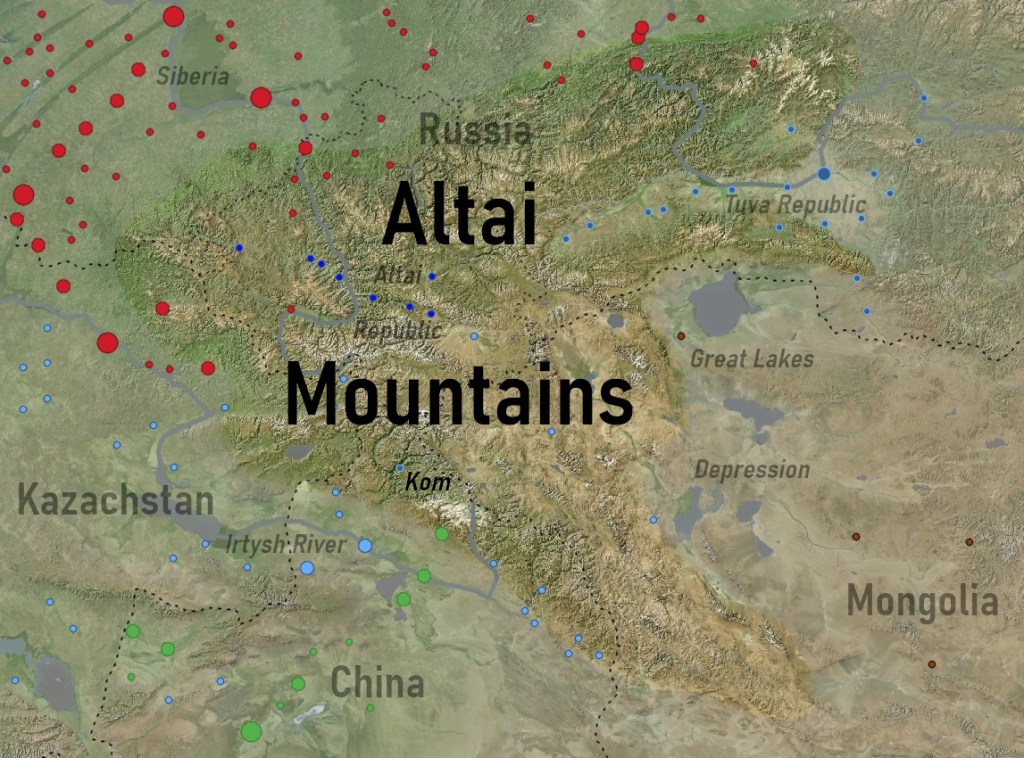
I couldn’t find a decent map of the Altai mountains showing the ethnic groups as well as the population density to get an overview so I made the one below. I think it says a lot about the Altai mountains that even Siberia looks densely populated in comparison. (You may have to enlarge it on a laptop to read it properly)
The village of Khom in China (also known as Hemu in Chinese) on the southern slopes of the Altai mountains still has a lively skiing tradition with its own unique skiing style. Instead of leaning forward on one’s ski’s, the Tuvans living in Khom lean backwards and use a single thick pole to break against the snow. They also use horse skins with thick fur to ascend up slopes and hunt for elk. Unfortunately this traditional way of living is severely under threat from modern amenities that do away with the need for traditional skis as transport and Kazakh immigration which disrupts cultural transmission. A Norwegian crew went on an expedition to this town a while back and made this short documentary about it:
Ethnicities in the Altai mountains
The Altai mountains are extremely sparsely populated. These mountains are located further to the east than the easternmost edge of the European temperate climate zone (which stretches into southern Siberia). The climate in Altai is therefore bitterly cold, dry and entirely unsuitable for agriculture.

The Altai mountains have originally been inhabited by two closely related Turkic peoples, the Altai and the Tuva. Despite being Turkic both these groups are culturally also heavily influenced by the Mongolian tribes to the east due to the conquests of the great khans in the Middle Ages. Both groups live in highly isolated regions that have been designated autonomous republics of Russia. In recent centuries the expanding populations from the Russian and Chinese empires and their successor states have increasingly encroached on the living space of the Altai and the Tuva. The fact that the Altai and Tuva have managed to survive is similar to how the inaccessible mountain passes of the Caucasus and Southeast Asian Massif shelter so many other marginal ethnic groups. In total there are no more than one hundred thousand Altai and three hundred thousand Tuvans.
Geography of the Altai Mountains
The Altai mountains are high mountains with sharp peaks indicating relatively young geologic formations. To the east the region is bounded by the Great Lakes Depression of Mongolia where endorheic salt lakes signify the beginning of the Mongolian steppe and the Gobi desert. To the southwest the mountain range is bounded by the Irtysh river which gets most of its water from the runoff and meltwater originating in the Altai mountains. Beyond the Irtysh as seen from the Altai mountains lies Xinjiang province of China. To the north the region is bordered by Siberia and the Tuvan autonomous republic.




 Continental Hotspot
Leave a Reply